From Procedure to Pathway:
Reframing Subacromial Shoulder Pain
An Interview with:
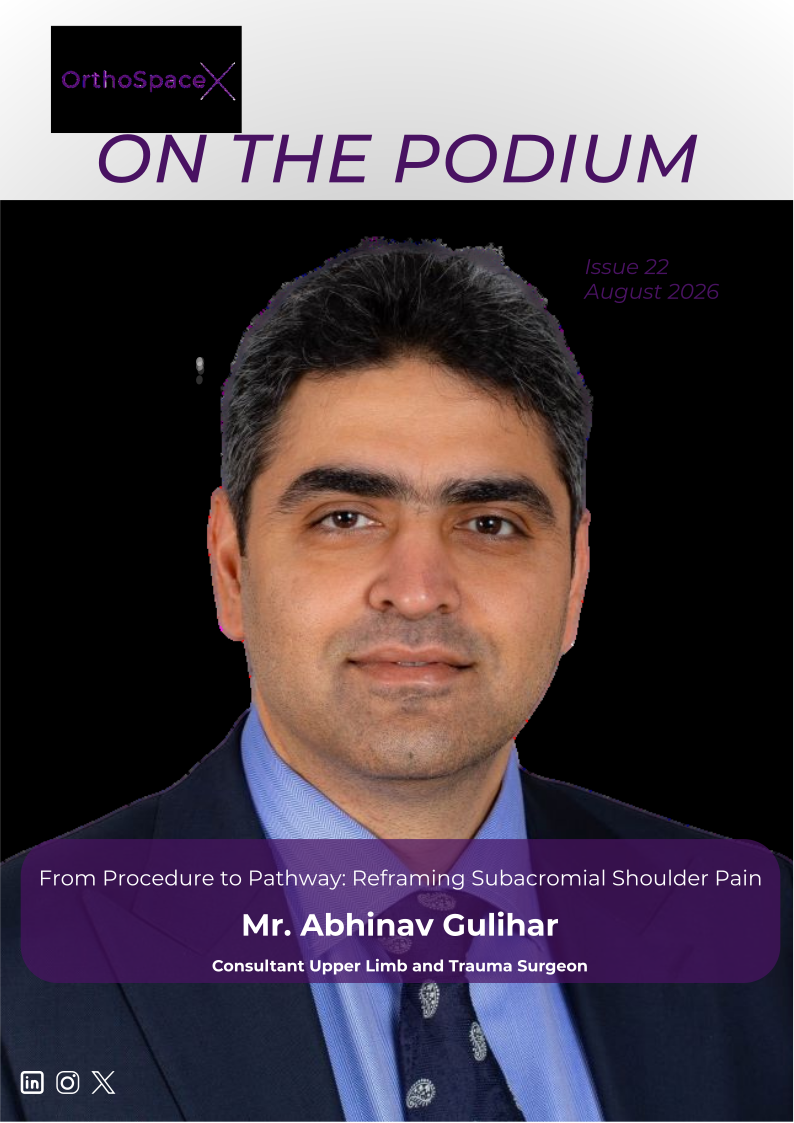
Mr. Abhinav Gulihar
Issue 22, August 2026
Your career spans high-volume NHS practice, private work, and innovation. What problem in everyday orthopaedics frustrates you most right now, and why has it been so hard to solve?
People don't walk on their arms, so shoulder and elbow problems often get pushed down the priority list, by patients and sometimes by the system as well. But the reality is, the impact is huge. Pain, poor sleep, time off work, it affects quality of life much more than we sometimes acknowledge. In shoulders particularly, we're still not very good at predicting who will do well with non-operative treatment and who would benefit from earlier surgery. And when we get that wrong, the cost is time, months of pain, repeated appointments, and a lot of frustration for patients. More broadly, there's still a gap between what should happen and what actually happens in a real pathway. We have excellent operations and good surgeons. But outcomes are often shaped by delays in referral, variable triage, inconsistent access to physio and imaging, and expectations that aren't always realistic.
That's why it's hard to fix — because it's not a single technical problem. It involves fixing mutliple issues within the system.
When you assess a new technology or implant, what are the non-negotiables that determine whether it earns a place in your practice?
My non-negotiables are patient safety and whether it genuinely solves a real clinical problem. If it doesn't clearly improve outcomes, reduce complications, or address a defined clinical problem, it is hard to be interested, especially in a busy NHS setting. The presence of robust, relevant, and reproducible evidence, outside a single centre, is very important but might not always be available for newer treatments. Cost-effectiveness matters — not just the implant price, but theatre time, learning curve, instrumentation, and revision implications. Innovation has to add value. If it's just different, that's not enough
What recent innovation have you adpated into your practice?
One of the innovations I've started using more recently is ultrasound-guided carpal tunnel decompression with a specially designed knife. It's a nice example of how we can refine what we already do, rather than completely reinvent it.
Because it's done through a much smaller incision with very targeted dissection, patients tend to have less pain afterwards, a smaller scar, and a quicker recovery. Most can get back to work, normal activities, and even sport much sooner than with traditional open surgery. It can also be done under local anaesthetic, which patients really appreciate, and we tend to see less pillar pain and quicker return of function overall.
Are there any other areas where you foresee significant innovations in the coming years?
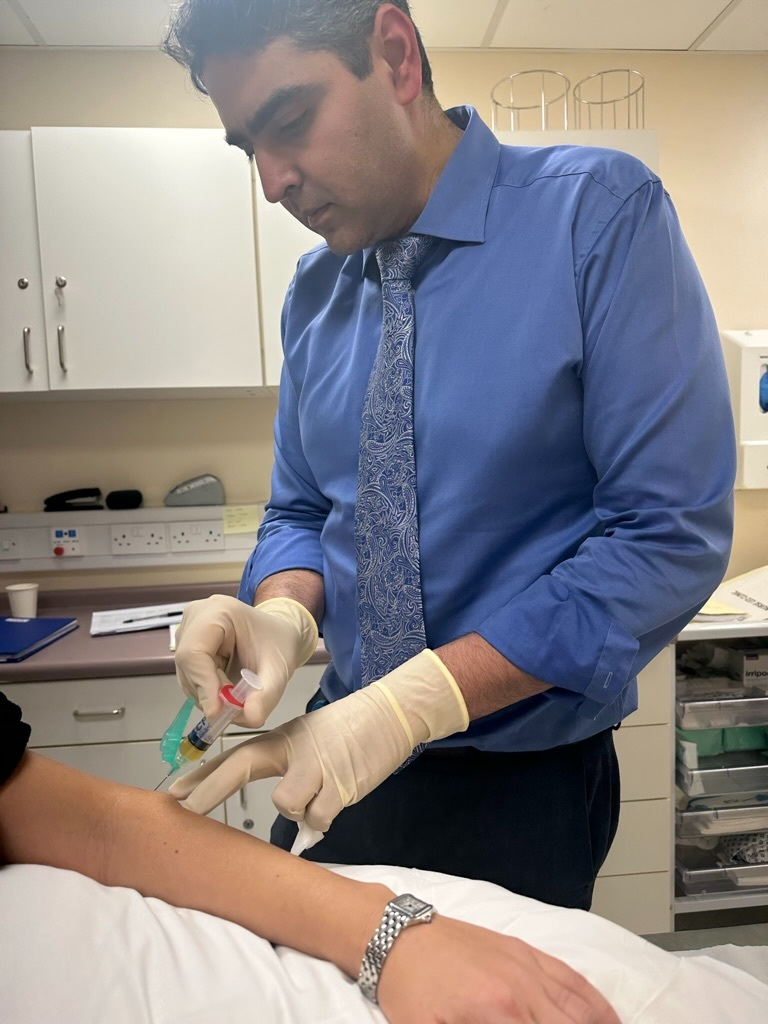
There's obviously a big push towards biologics in orthopaedics. PRP in particular has shown promise in certain conditions, especially tendinopathies and early degenerative problems. It is minimally invasive, relatively low risk, and works with the body's own healing response. For some patients, it can improve symptoms and potentially delay surgery. That said, we do need to be careful not to get carried away. The evidence is still quite mixed, and results can vary a lot depending on how it's prepared and which patients you use it for. There's also the issue of cost, especially when patients are paying out of pocket without guaranteed benefit.
What do you think will be the role of robotic surgery in orthopaedics
I think robotic surgery will definitely have a role, but probably less important than people first expected. Where it really makes sense is in areas like joint replacement, where precision and consistency matter as small differences in alignment can have an impact on long term outcomes.
It can help standardise parts of the operation and reduce variation, which is valuable, especially across different surgeons and centres. But it's not a magic fix. There's added cost, set-up time, and a learning curve, and we still need to be sure that improved accuracy actually leads to better outcomes for patients.
So for me, it's a useful tool rather than a solution in itself. It supports good surgery, but it doesn't replace judgement. If it helps us deliver more consistent results at scale, that's where the real value will be.
What first made you step back and rethink how subacromial shoulder pain was being managed?
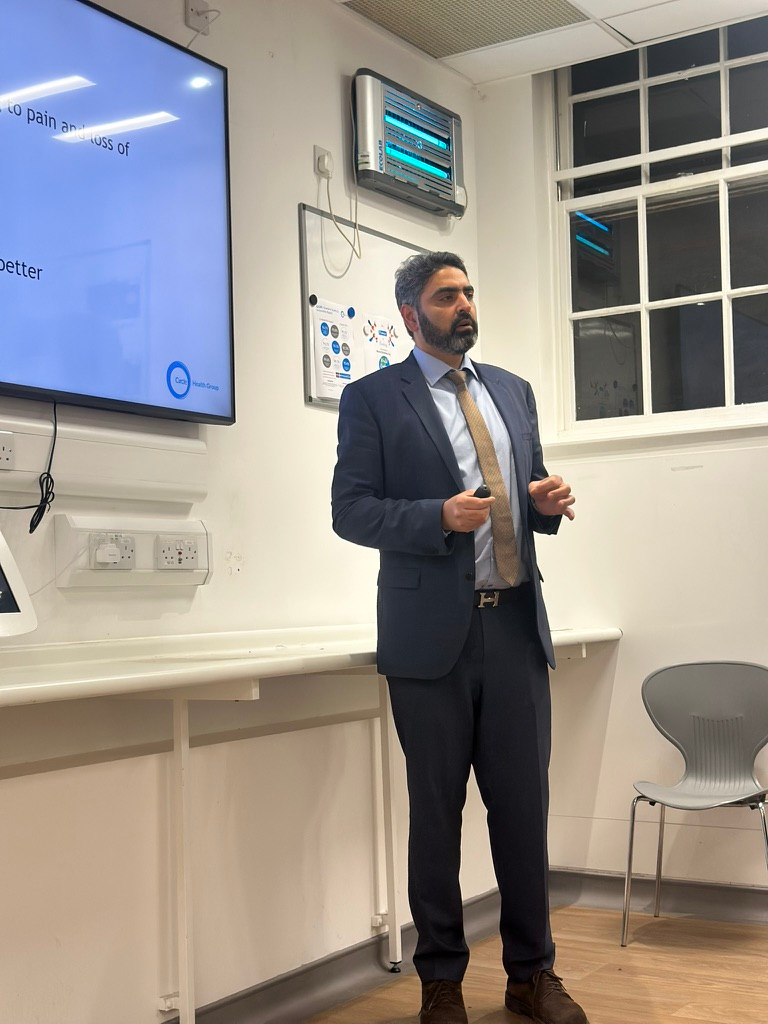
I don't think it was a single moment — it was more a gradual shift in how I was thinking. Early on, like most of us, I was trained in a system where subacromial decompression was a fairly routine part of practice. Many patients did well, so you don't immediately question it. But over time, I started to notice that there were some patients who didn't improve as much as you'd expect, patients who came back still symptomatic and equally, patients who got better with good physiotherapy alone. Then the evidence starts coming through, and it forces you to step back a bit and ask — are we always offering the right treatment, at the right time? For me, it wasn't about suddenly abandoning surgery. It was more about becoming more thoughtful — making sure we'd genuinely optimised non-operative care, and being clearer about why we were operating.
How did patients respond when you started managing things differently?
The majority of patients are delighted to hear that surgery is not required. Some patients, especially those in a lot of pain, came in expecting a fairly quick surgical solution. So when you start talking about rehab first, it can feel to them like a delay or even a step backwards. But I found that if you take the time to explain things properly, why we're taking that approach, what the evidence shows, and what the realistic outcomes are, most patients are actually very reasonable. What patients appreciate is a clear management plan, where they are in the pathway, what the next step is, and when you'll review for follow up, they engage much better.
About Mr. Abhinav Gulihar
Mr Abhinav Gulihar is a Consultant Orthopaedic Surgeon and Clinical Director for Trauma & Orthopaedics at King's College Hospital NHS Foundation Trust. He is an upper limb specialist with a strong interest in innovation, surgical technology, education and developing more effective and efficient ways of delivering orthopaedic care.
Alongside his NHS role, Mr Gulihar has a busy private practice across London and Kent, including at HCA UK at The Shard, Circle Health Group and hospitals in Central London.
Mr Gulihar completed his specialist orthopaedic training in the UK, followed by fellowship training in shoulder and elbow surgery and a European Arthroscopy Fellowship, gaining experience with leading centres and surgeons across Europe and the United States. He has remained closely involved in surgical education throughout his career and regularly teaches and lectures at national and international meetings, courses and surgical training events.
He has an active academic interest and has contributed to the orthopaedic literature through peer-reviewed publications, research and peer review. He is also a co-founder and convenor of the London Orthopaedic Meeting, an increasingly popular multidisciplinary educational meeting bringing together surgeons, trainees, physiotherapists, allied healthcare professionals and industry, with leading faculty from the UK and internationally.
As Clinical Director, Mr Gulihar is involved in shaping and delivering orthopaedic services across one of the UK's major NHS teaching trusts. His role encompasses service development, workforce and theatre efficiency, education and training, and the evaluation and introduction of new technologies into clinical practice.
A particular focus of his work is the interface between surgeons, healthcare systems, technology and industry. He is interested not simply in what new technology can do, but whether it addresses a genuine clinical need, integrates effectively into existing pathways and ultimately improves outcomes and delivers value for patients and healthcare systems.
Mr Gulihar is passionate about innovation that translates into meaningful change. He believes the most successful advances in orthopaedics come from genuine collaboration between clinicians, engineers, entrepreneurs and industry — identifying real clinical problems, challenging established ways of working and developing solutions that can make a tangible difference to everyday healthcare.
We would like to thank Mr. Abhinav Gulihar for his insight.
Thank you for being part of Our Community
We believe in pushing boundaries, sharing knowledge, and highlighting the people and ideas shaping the future of orthopaedics. On the Podium is our platform for showcasing the journeys, challenges, and breakthroughs of those making a positive impact in the orthopaedic community.
If you’ve found value in these stories, we encourage you to stay connected. Follow us on social media for the latest updates, subscribe to our email list for exclusive content, and share these insights with others who might find them just as inspiring.
Your engagement helps us continue to bring important stories to light and grow a community of forward thinkers.
Thank you for reading, supporting, and being part of this journey. We look forward to exploring more with you.
Thank you to our sponsors:



To download this issue of On The Podium, click below.
Sign up to On The Podium. The latest insights and inspiration from orthopaedic specialists around the globe sent straight to your inbox.
On The Podium
The newsletter brought to you by OrthoSpaceX
| Engage with Orthopaedic Leaders | Exclusive orthopaedic insight | |
| Stay Ahead in Orthopaedic Advancements | Uncover Surgical Innovations | |
| Empower Your Orthopaedic Knowledge | Unlock the Minds of Orthopaedic Specialists |